Table of Contents
The beauty industry is saturated, and audiences are getting harder to impress.
Consumers see thousands of ads a day, and over 40% say they feel overwhelmed by constant ads, which leads to faster scrolling and lower attention. In the beauty industry especially, where many products promise similar results, this turns into real ad fatigue.
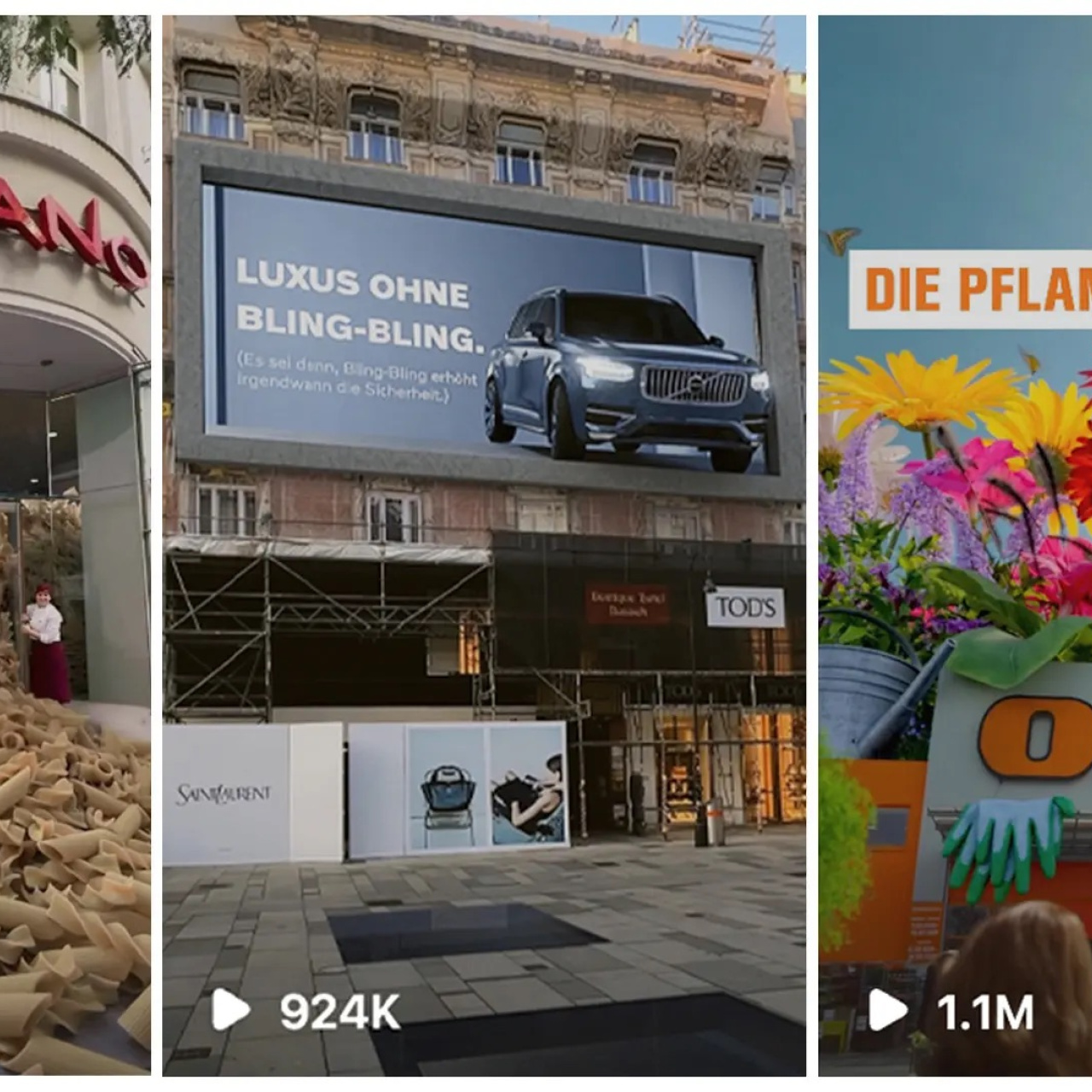
FOOH or Fake Out of Home gives brands a different way to show up. Instead of another polished product shot, it puts the product into a real setting and exaggerates what it does.
For beauty, that’s enough. Longer lashes, smoother skin, glossier lips, when you show it clearly and at scale, people get it instantly.
5 Tips for Creating FOOH Beauty Ads
1. Make the product part of the scene
FOOH works best when the product interacts with its surroundings instead of sitting on top of them. That interaction is what makes people pause, it feels less like an overlay and more like something happening in the real world.
In beauty FOOH ads, this could mean lashes attached to city elements or skincare integrated into everyday environments. Campaigns that do this well consistently outperform standard formats in engagement, especially as audiences grow less responsive to traditional ads due to fatigue.
2. Show the benefit visually
The viewer should understand the product without needing to read or listen. Beauty is outcome-driven, so the ad should focus on the result: length, glow, smoothness, rather than the product itself. When the benefit is clear at a glance, it reduces friction and keeps people watching.
This matters more now, since 49% of consumers say they avoid brands after seeing the same ad too often, meaning clarity has to land fast.
3. Front-load the visual hook
The first seconds decide whether the video gets watched or skipped. FOOH ads need to introduce the core visual immediately, not build up to it. If the main idea appears too late, most people won’t see it at all. This is especially relevant when most users skip or avoid ads, so the hook has to land instantly.
4. Use humor, but keep the product clear
Humor can make an ad more watchable, but it shouldn’t compete with the product. The best FOOH campaigns use humor to support the idea, not distract from it. If people remember the joke but not the product, the ad loses effectiveness.
At the same time, 78% of consumers say entertaining ads are more likely to capture their attention, which is where humor helps, when it’s tied directly to the product.
5. Build for replay and sharing
FOOH ads often work because they feel slightly unreal but still believable. That tension makes people watch again to understand what they’re seeing. The clearer the illusion, the more likely it is to be shared or replayed. This matters in a landscape where 62% of consumers say they feel overwhelmed by ads and tend to ignore them, so anything that earns a second look has an advantage.
5 FOOH Beauty Ad Examples (And What Works)
1. Maybelline New York's Mascara Sign
This FOOH ad features a giant mascara tube styled like a streetlight applying product to oversized lashes on a road sign. The setup works because it uses a familiar street element, so the idea is easy to understand right away.